Layout
Layout settings control how employees are displayed in Org Chart and Employee Directory views. Choose a layout that suits your employee data and the available screen space.

View layout
For each view, use the Layout type selector to choose how employees are displayed.
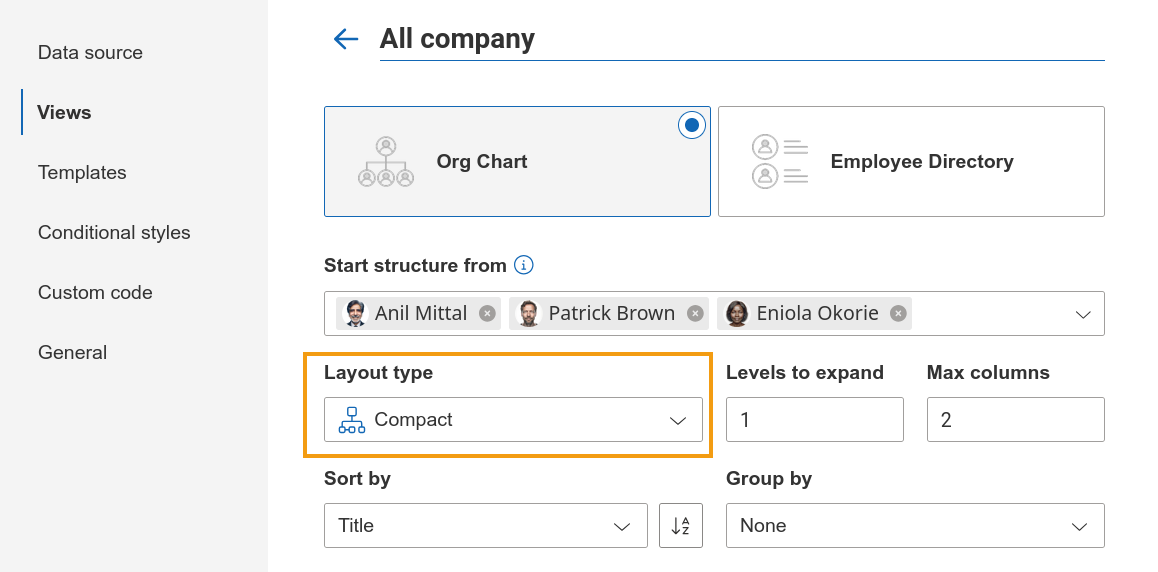
Depending on the selected layout, you can also configure:
Levels to expand: controls how many hierarchy levels are expanded by default.
Max columns: limits the number of horizontal columns before boxes begin stacking vertically (available only for Compact layout).
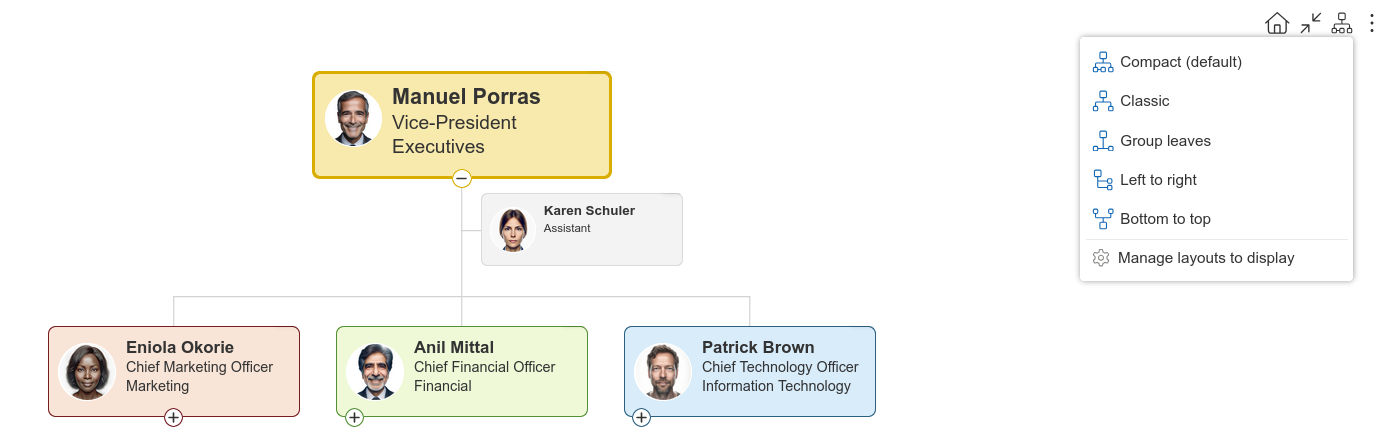
Layouts switcher
Users can switch between available layouts to view the chart in a way that best fits their screen size or navigation preferences. This choice will be remembered for the current user only and will not affect others.
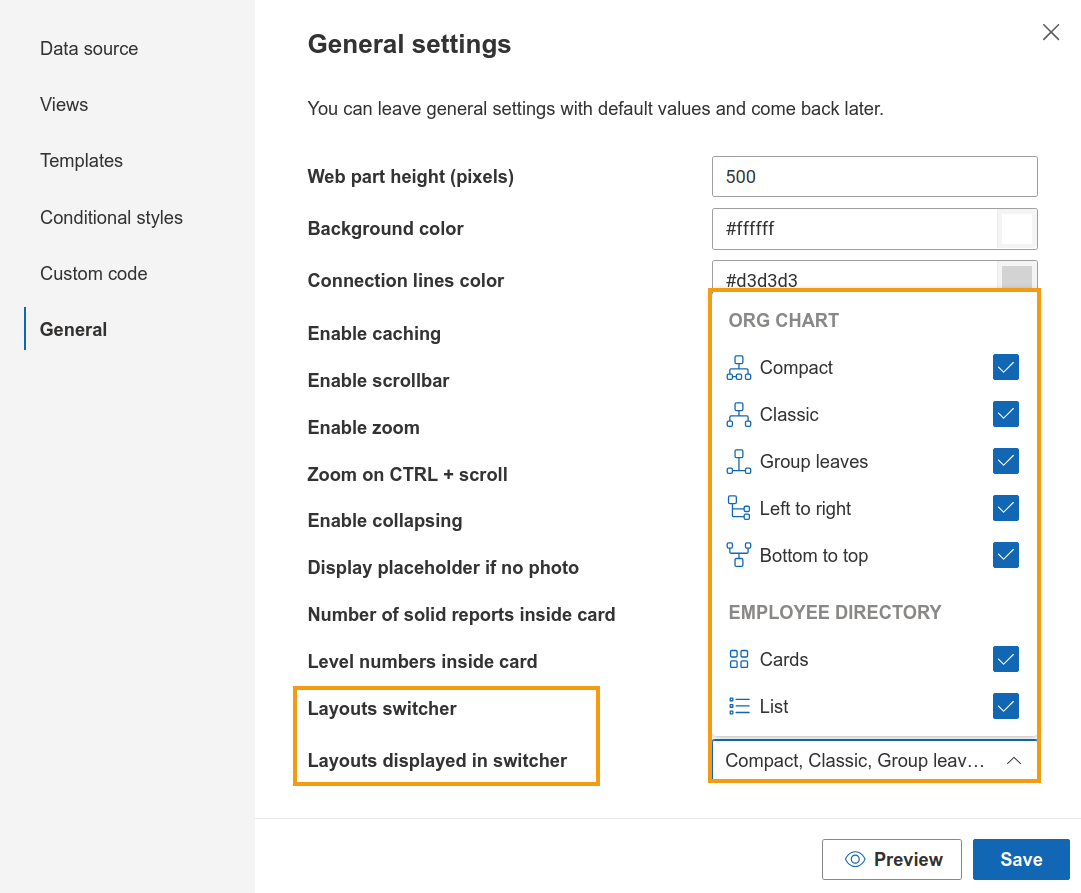
In case you want to restrict this option, you can either hide the switcher completely or limit available options from the General setting panel.
Org Chart layouts
For Org Chart views, you can further customize how the hierarchy is displayed with the following options:
Compact
Being the default layout, Compact keeps a top-to-bottom structure while reducing horizontal space usage. It is useful for wide organizational charts with many departments or teams.
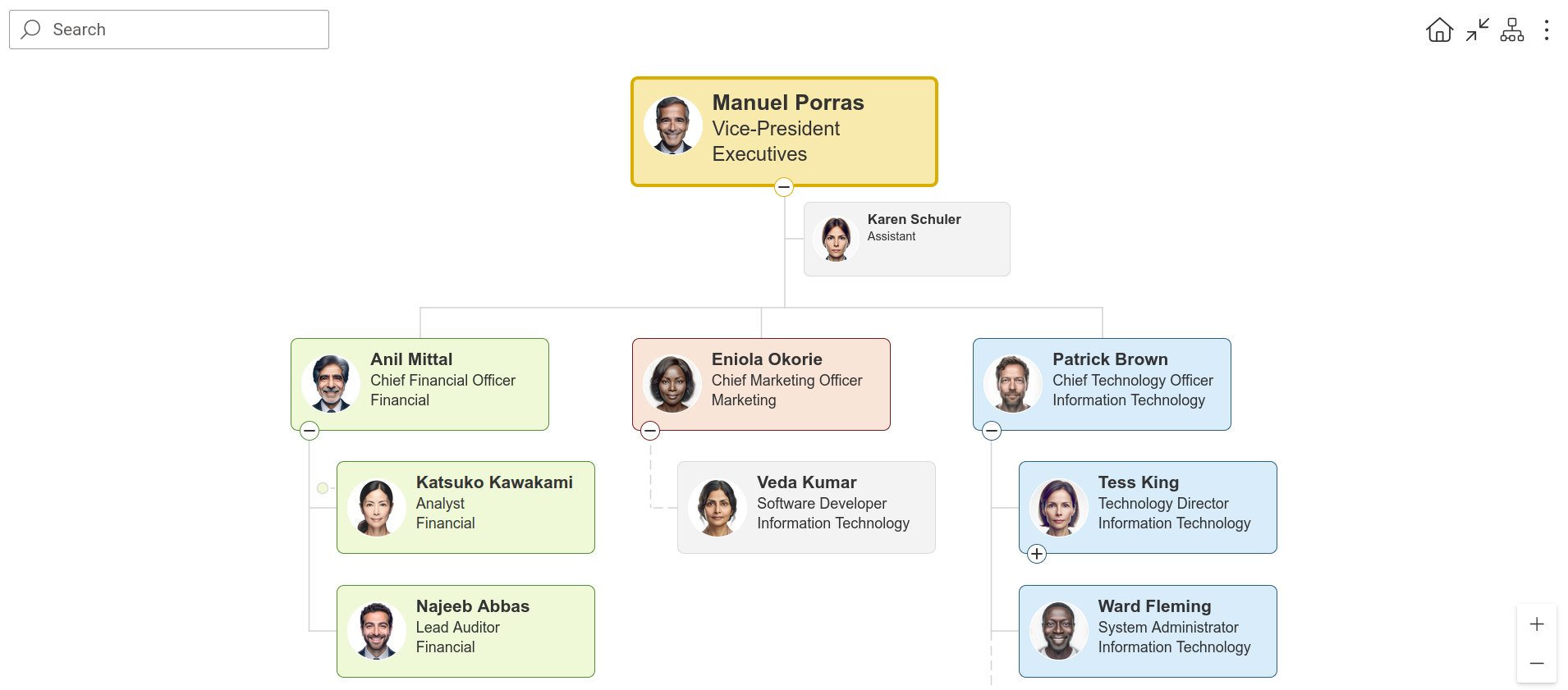
Use Max columns to control how many columns can appear before boxes begin stacking vertically. By default, boxes from the third level onward are stacked beneath second-level boxes to maintain a fixed chart width.
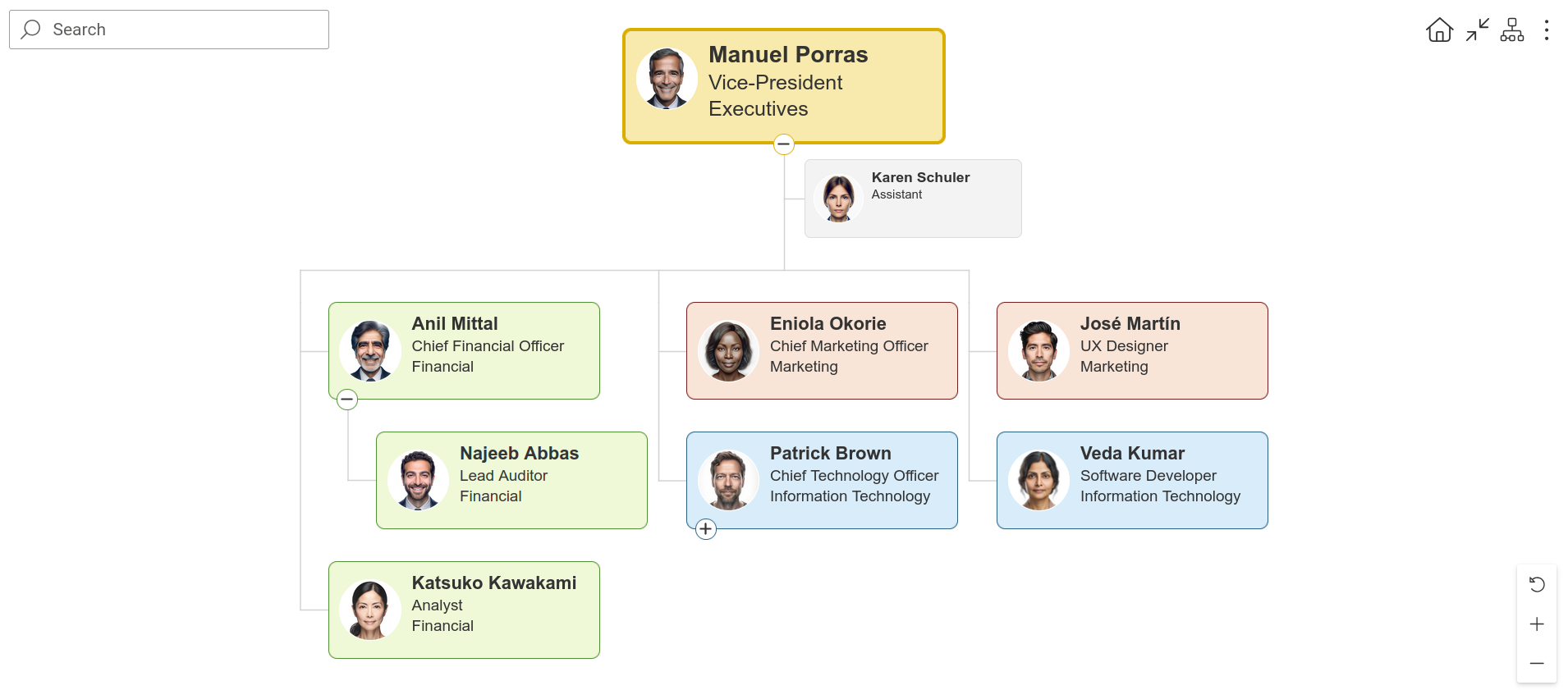
You can also change their orientation for individual boxes directly in the chart.
Classic
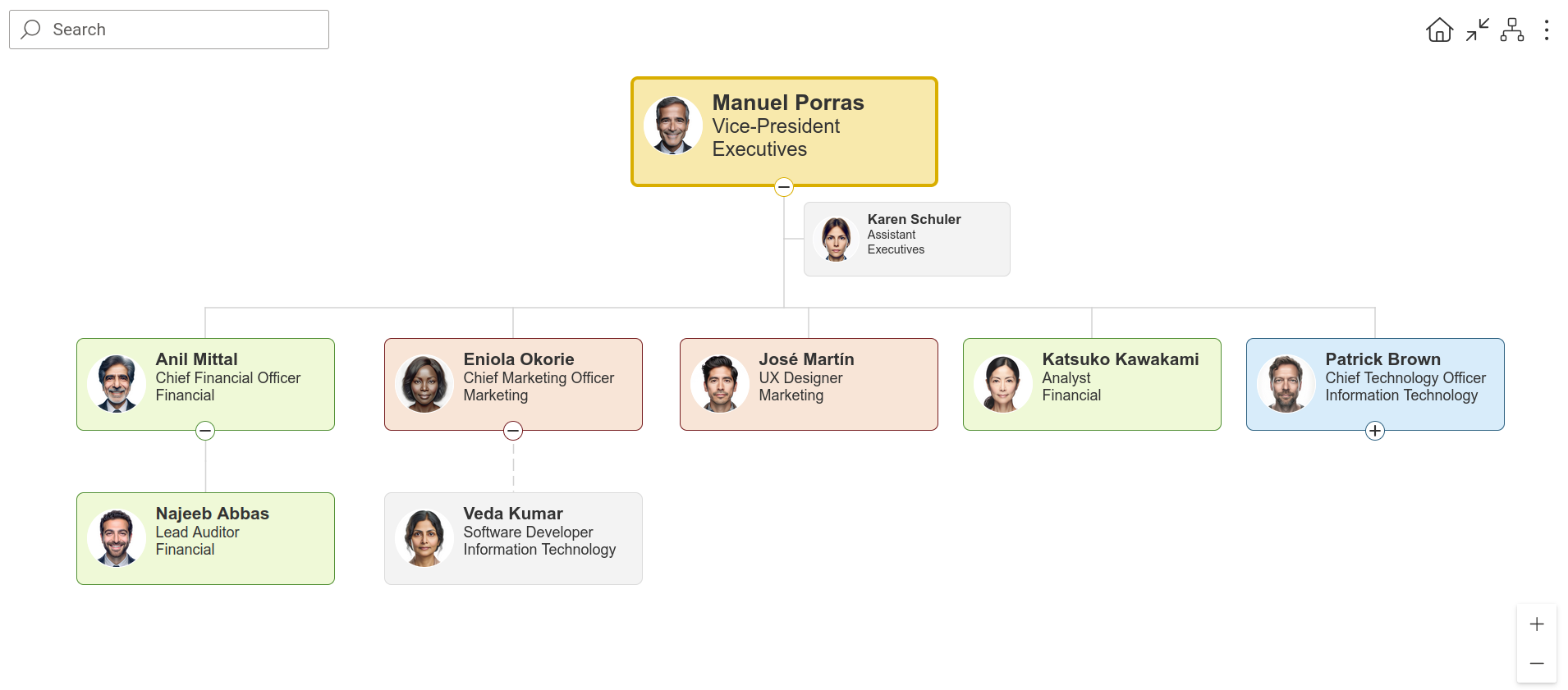
Classic displays the hierarchy in a traditional top-to-bottom structure and is suitable for standard charts.
Group leaves
Group leaves is a variation of the classic top-to-bottom layout where employees without subordinates are grouped into two columns on the right side of the chart.
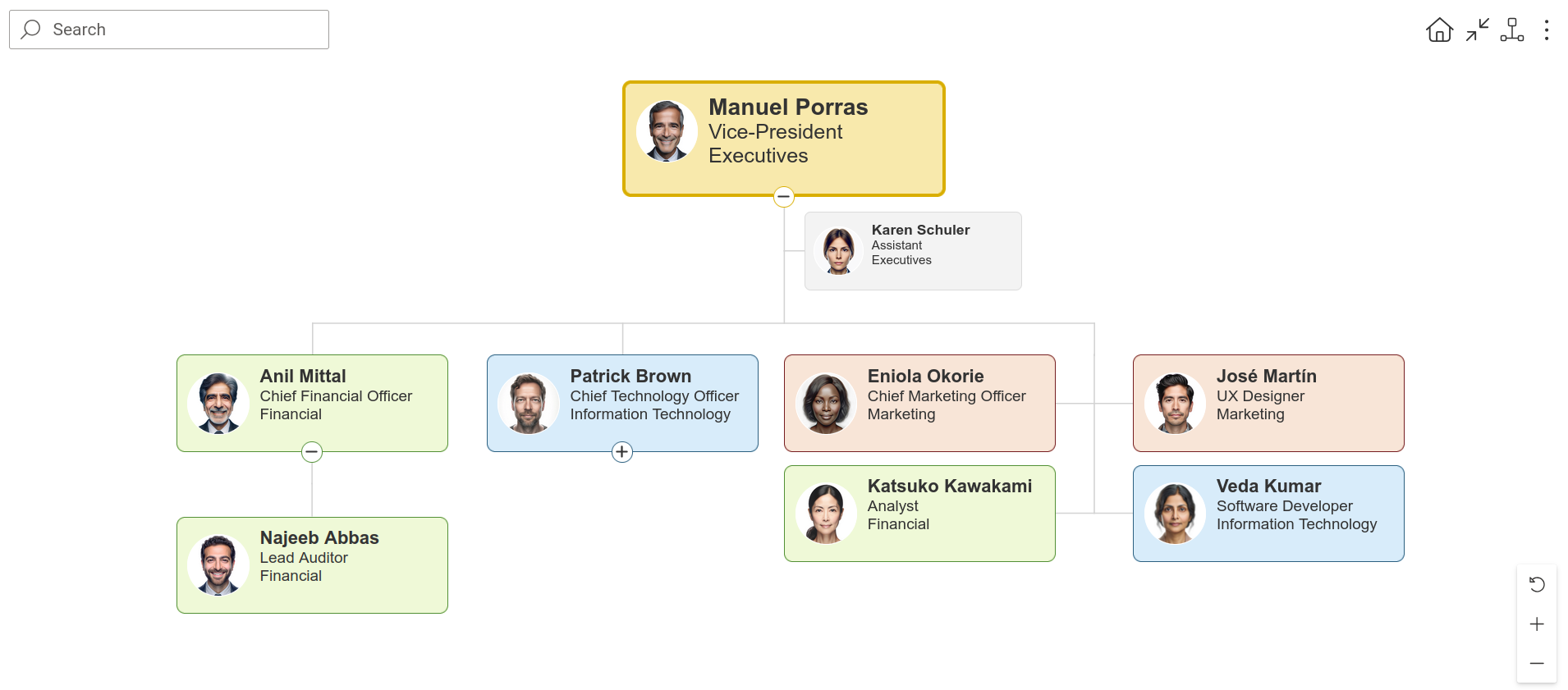
Left to right
Left to right displays the hierarchy horizontally with vertically stacked child items, similar to a file explorer structure.
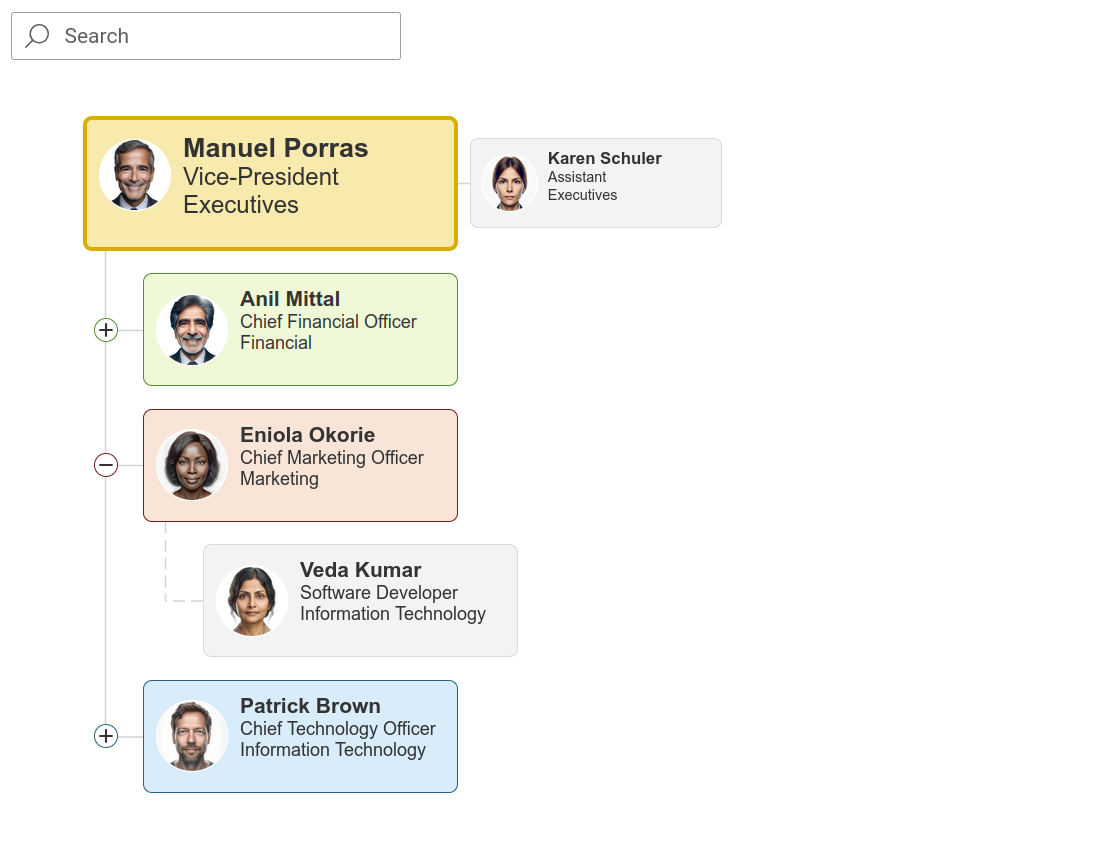
Bottom to top
Bottom to top is an inverted version of the top-to-bottom layout where the root item appears at the bottom of the chart.
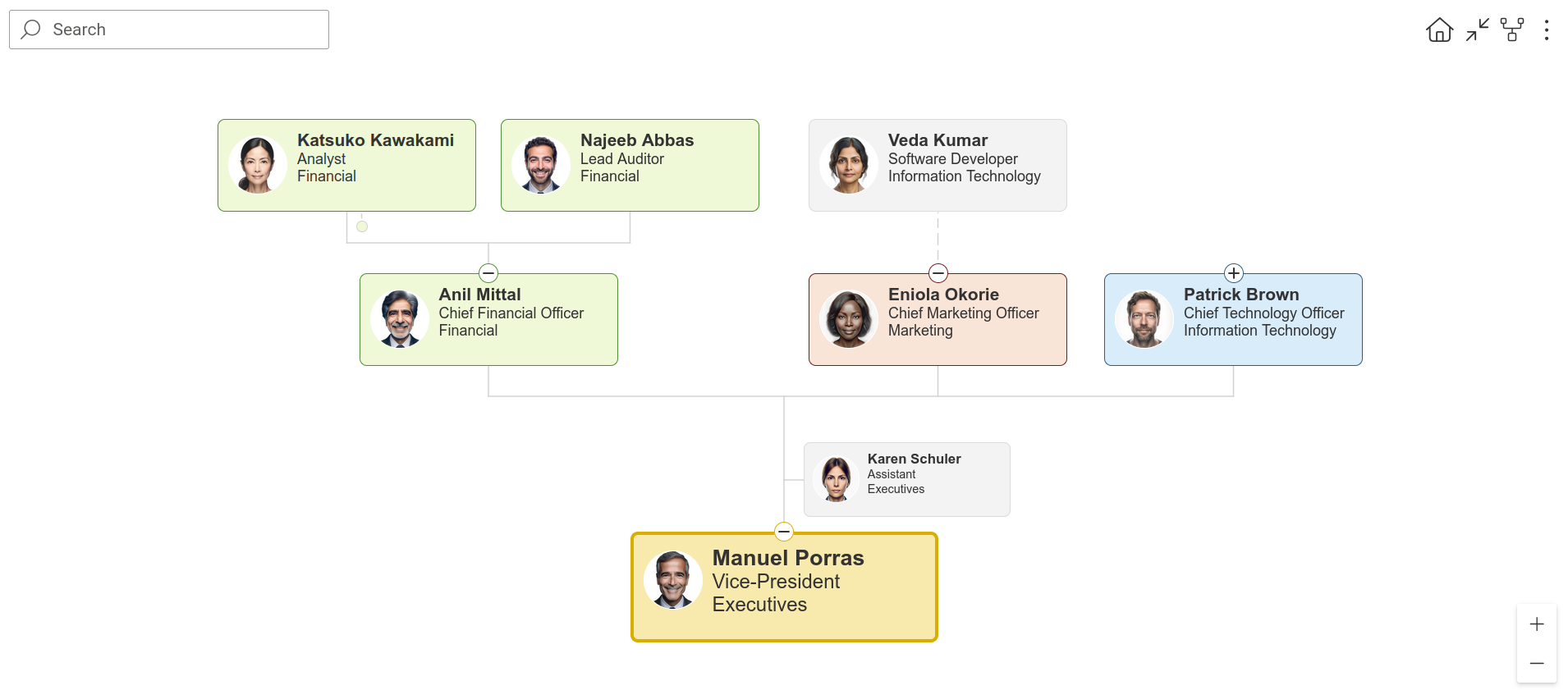
Employee Directory layouts
For Employee Directory views, you can choose how employees are displayed:
Cards
Display employees as cards, with their information organized in an easy-to-scan layout.
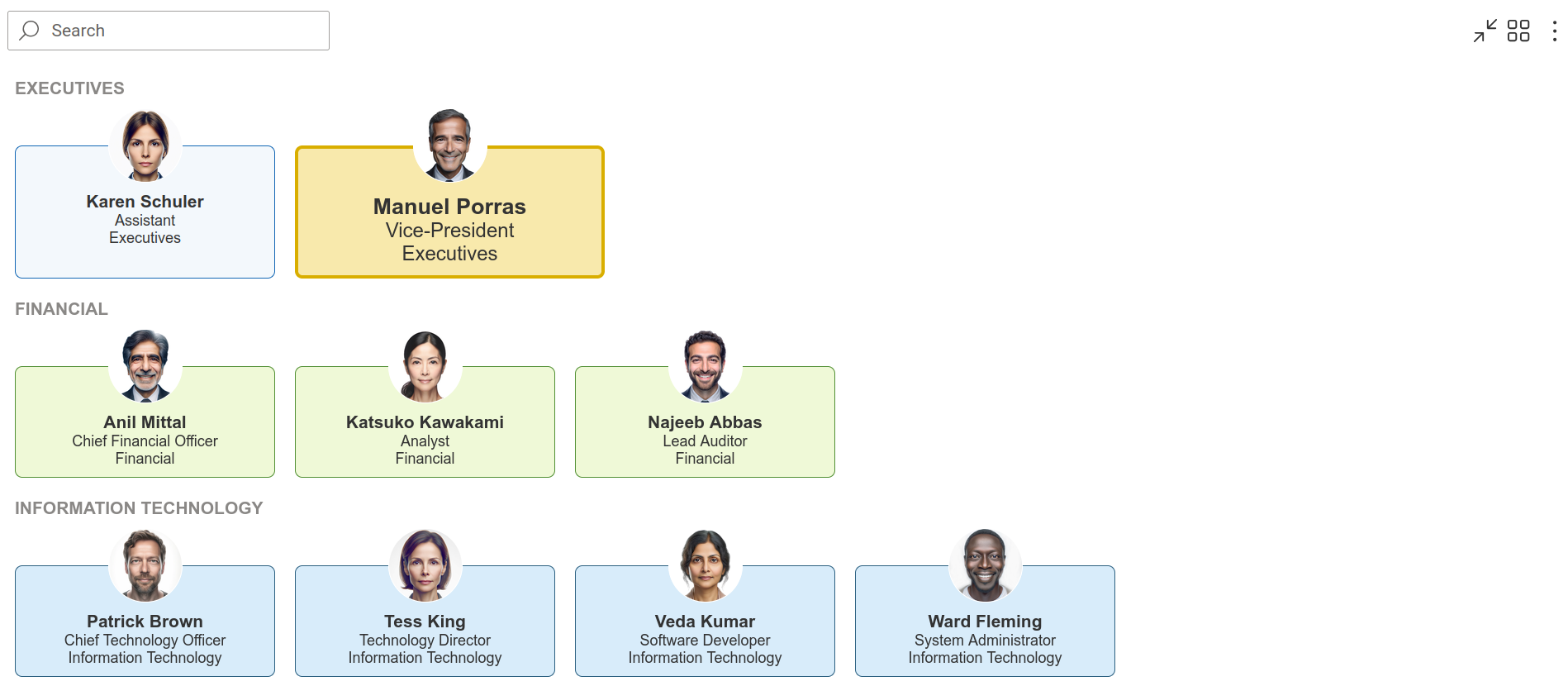
For this layout, we recommend using the Template design with the image positioned above the employee information (vertical):
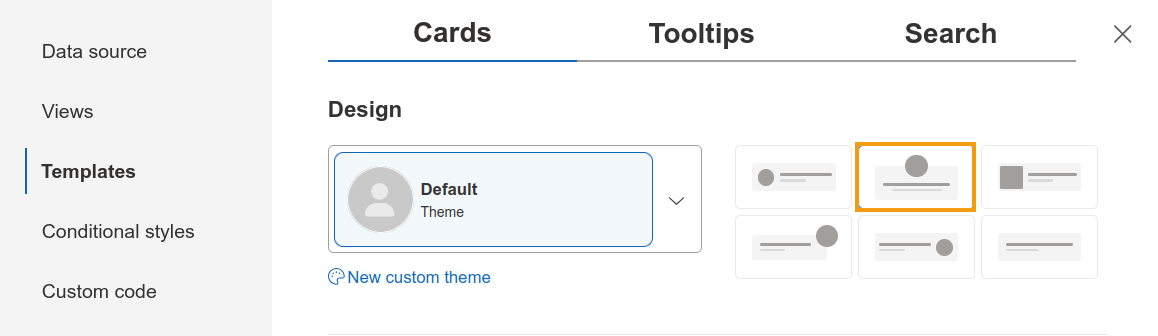
This option creates a cleaner, more structured look for your employee cards. For more information on customizing the chart design, go to the Templates step.
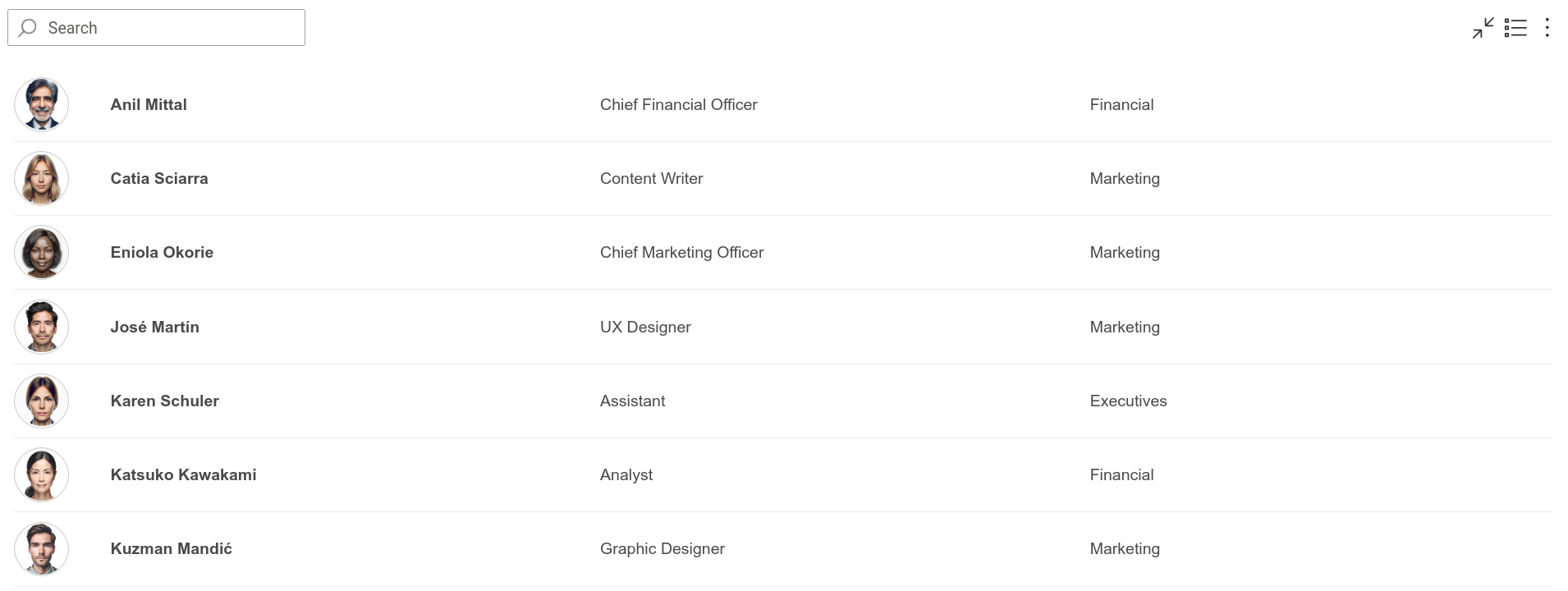
List
Display employees in an ordered table, making it easy to browse and compare employee information.
Note
Go to the next step of the configuration wizard – Templates.