Upload CSV or Excel file
Run multiple processes using data from a CSV or Excel file without creating complex flows in Power Automate, Zapier, or Make.
This option is useful for one-time tasks such as sending bulk invitations or generating certificates.
For an additional example of how this feature can be used in practice, see our blog post:
Note
This feature supports only simple and object tokens. Collection tokens are not supported. Learn more about tokens.
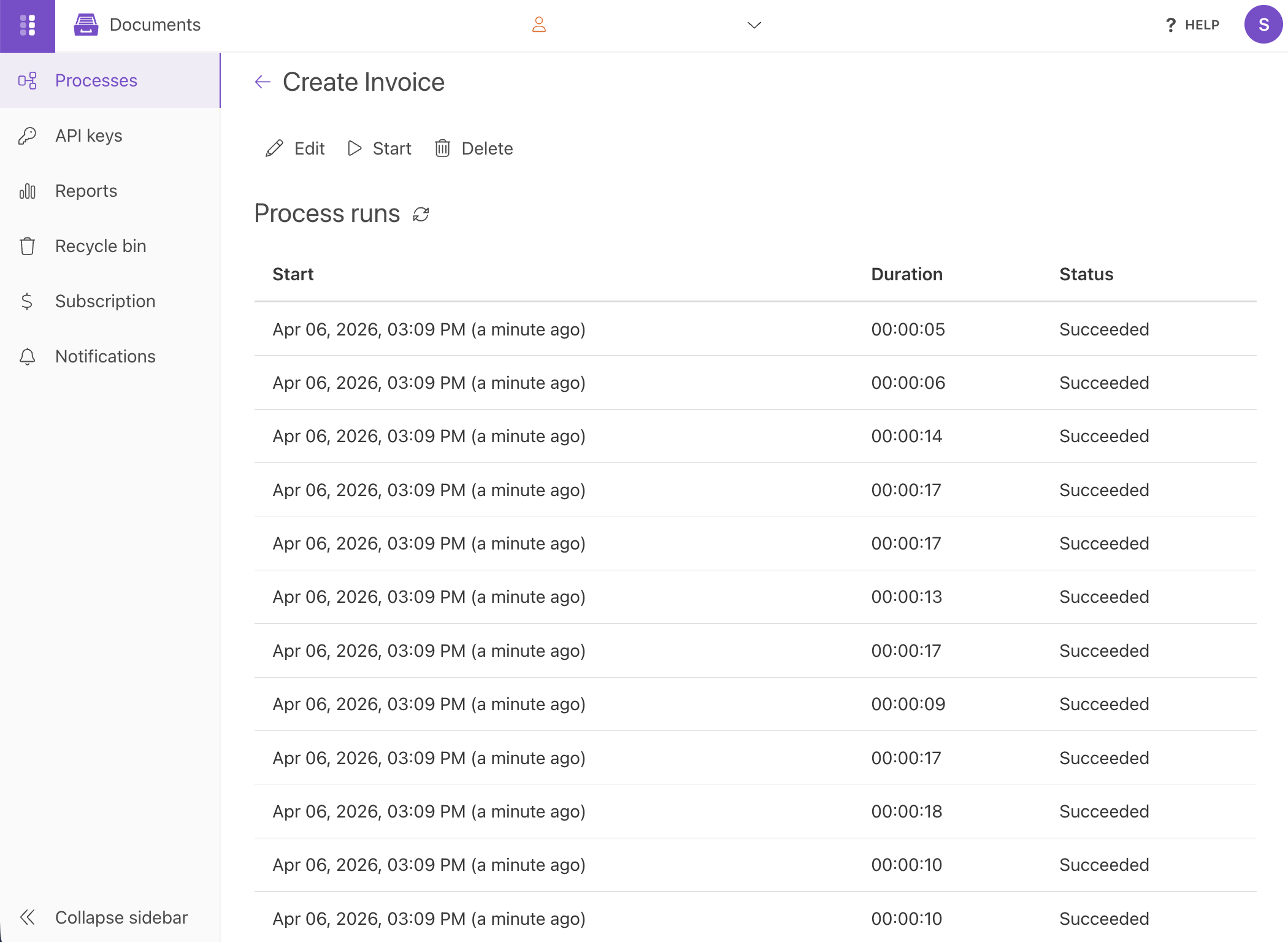
To start, click Upload CSV or Excel file:
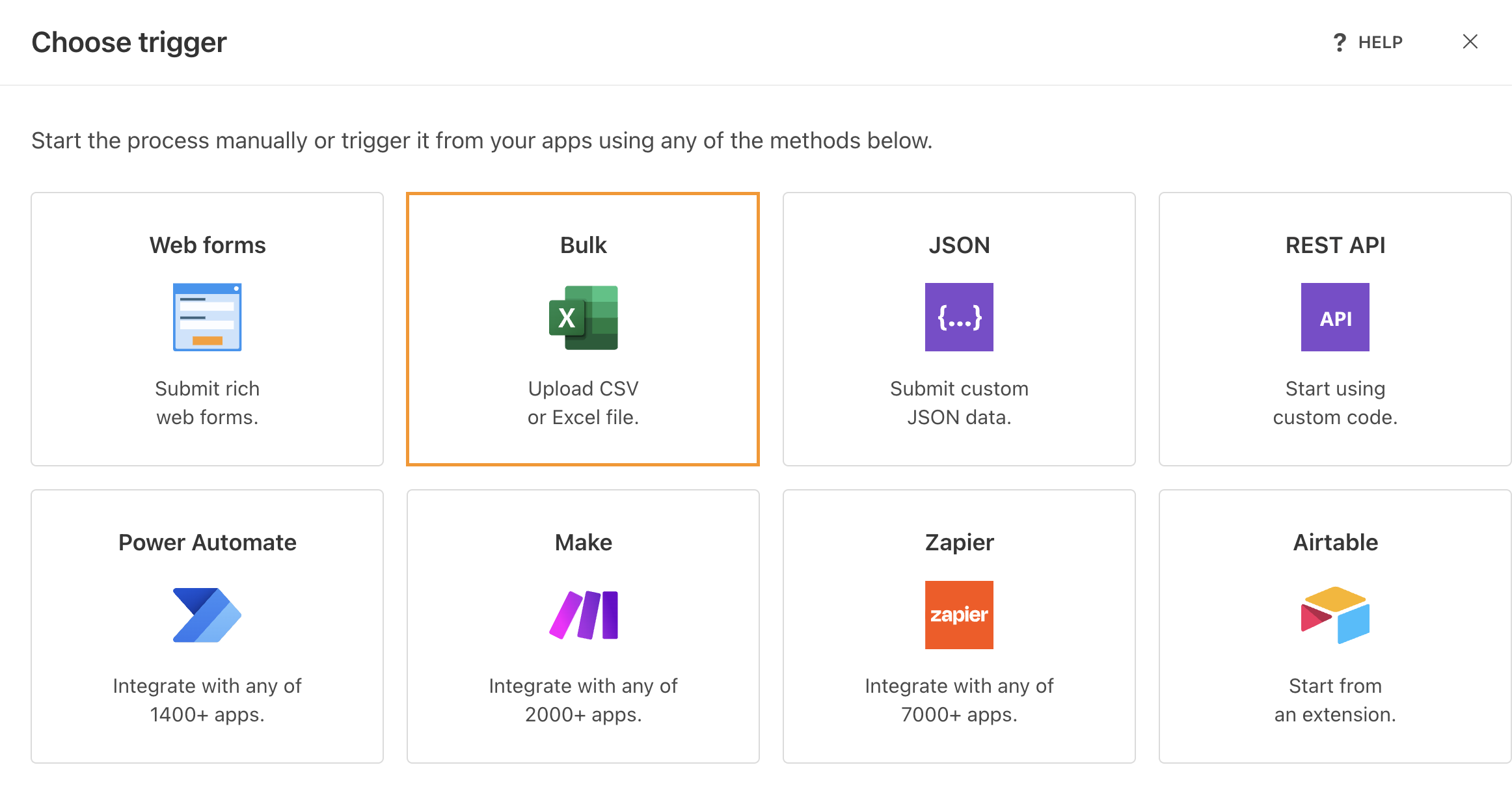
Upload a CSV or Excel file with your data. Then configure the options below.
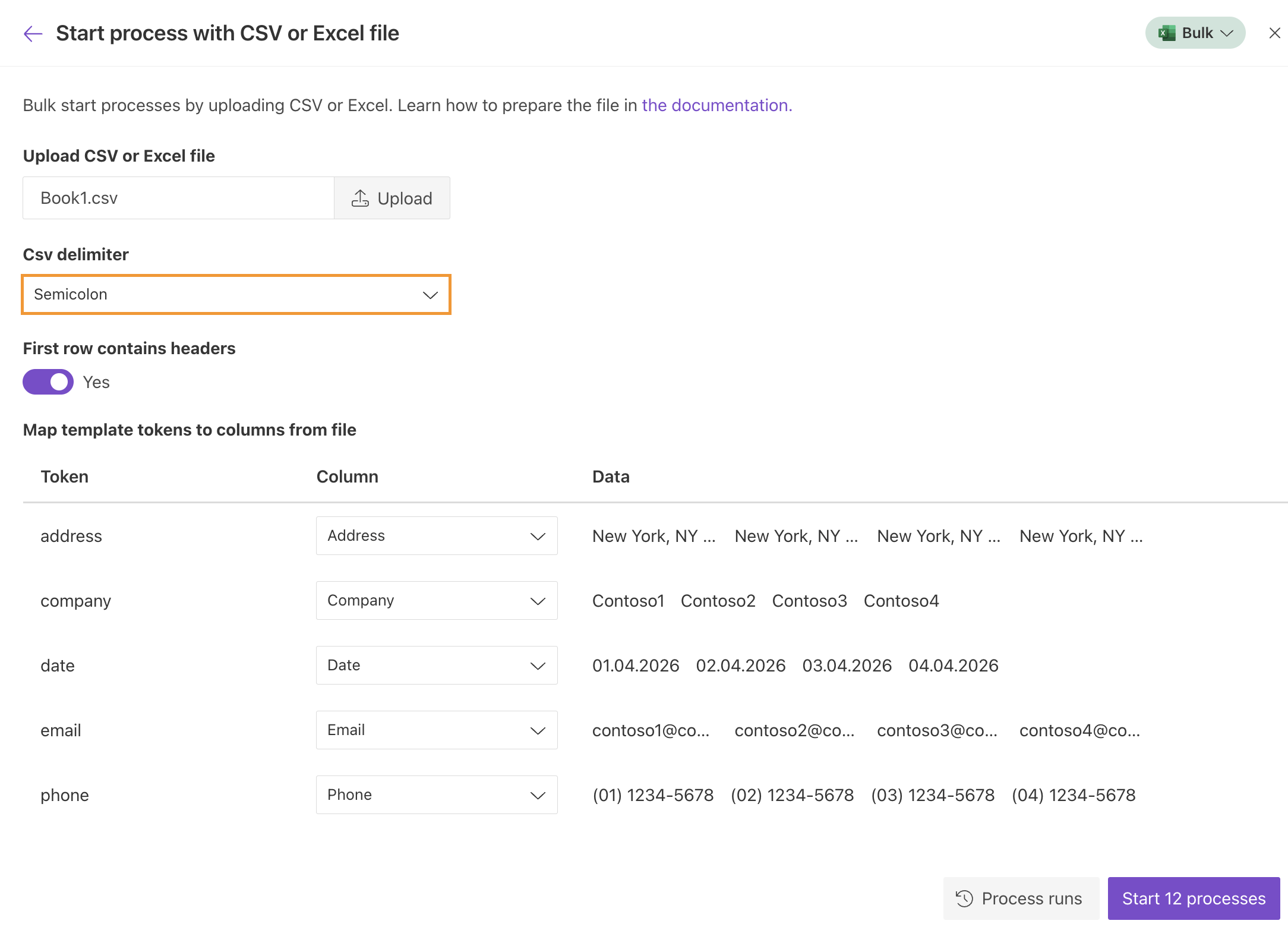
CSV delimiter
Defines how columns are separated in the CSV file. By default it’s a comma.
You can select from the following default values: Comma, Semicolon, Tab or Pipe.
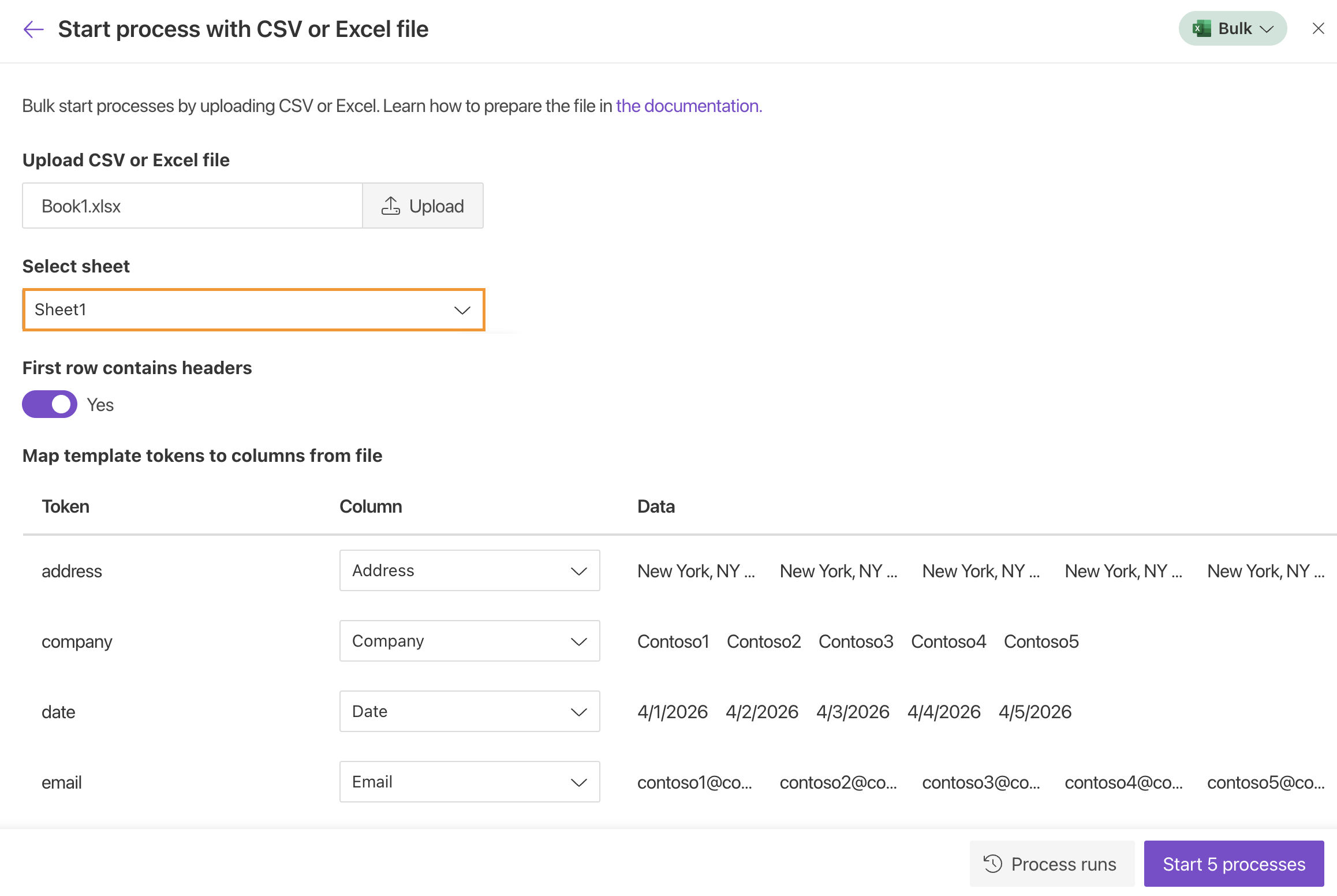
Select sheet
After uploading an Excel file, select the sheet to use. The first sheet is selected by default.
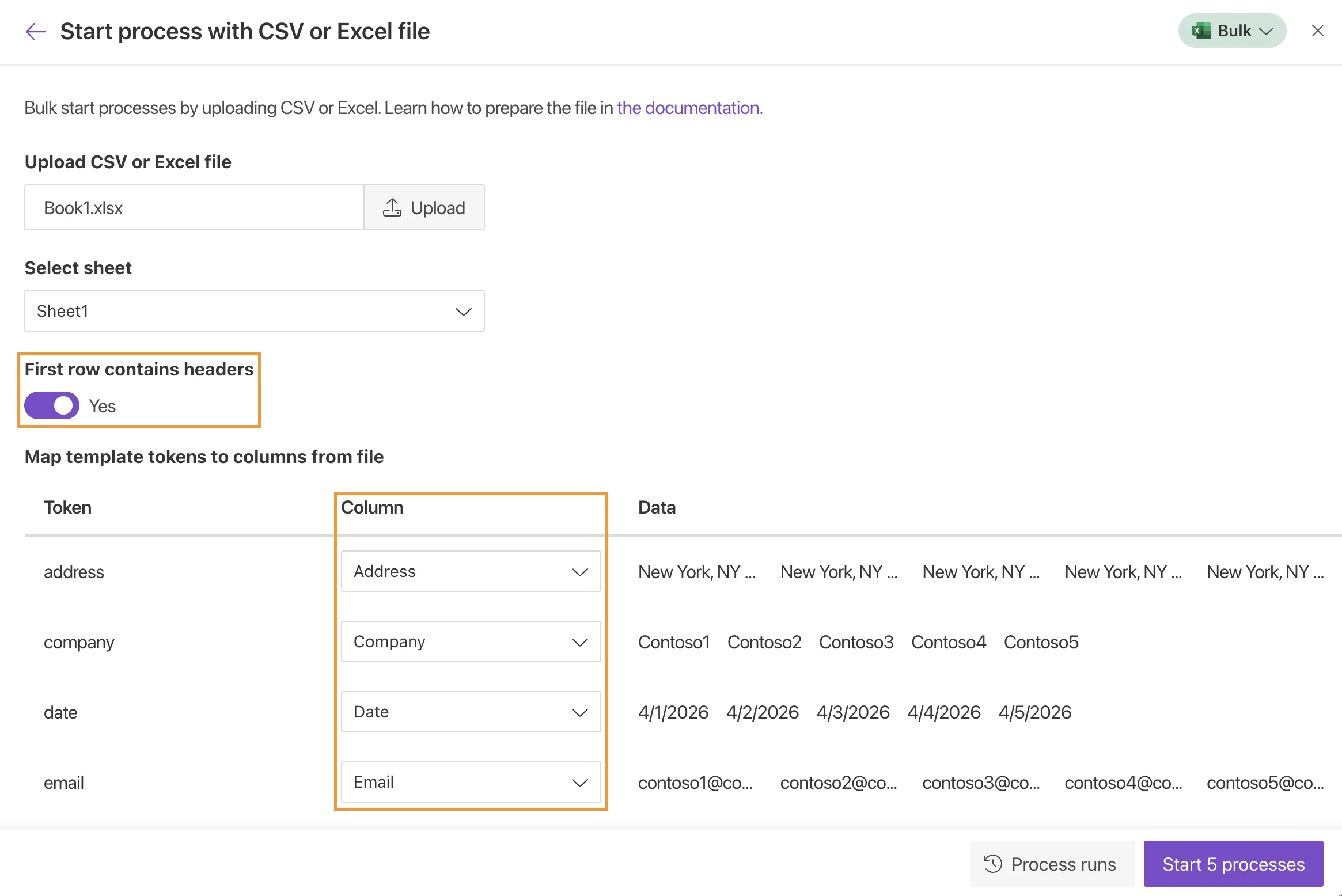
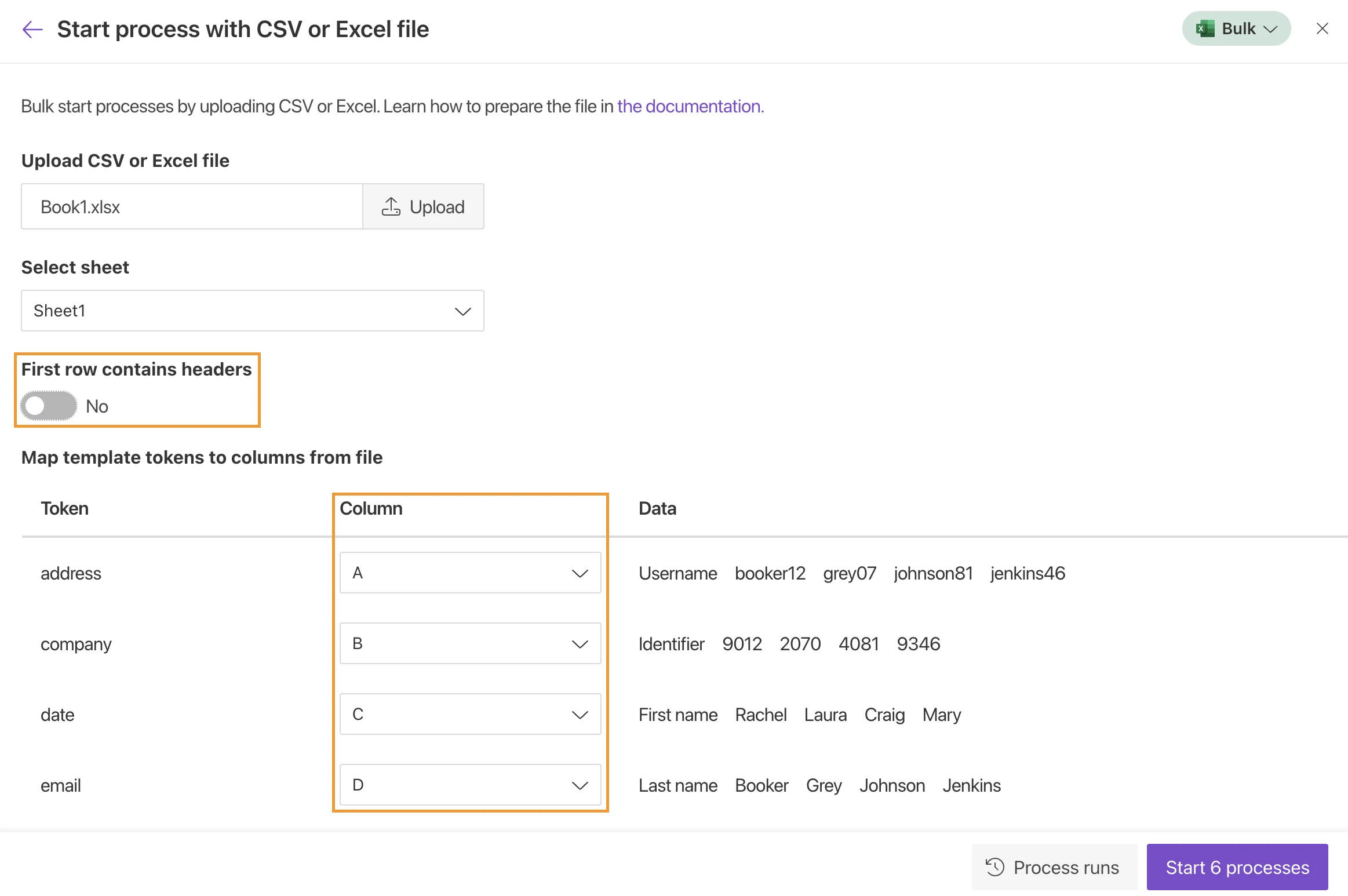
First row contains headers
If enabled, values from the first row are used as column names in mappings.
If disabled, columns are labeled as A, B, C, etc.
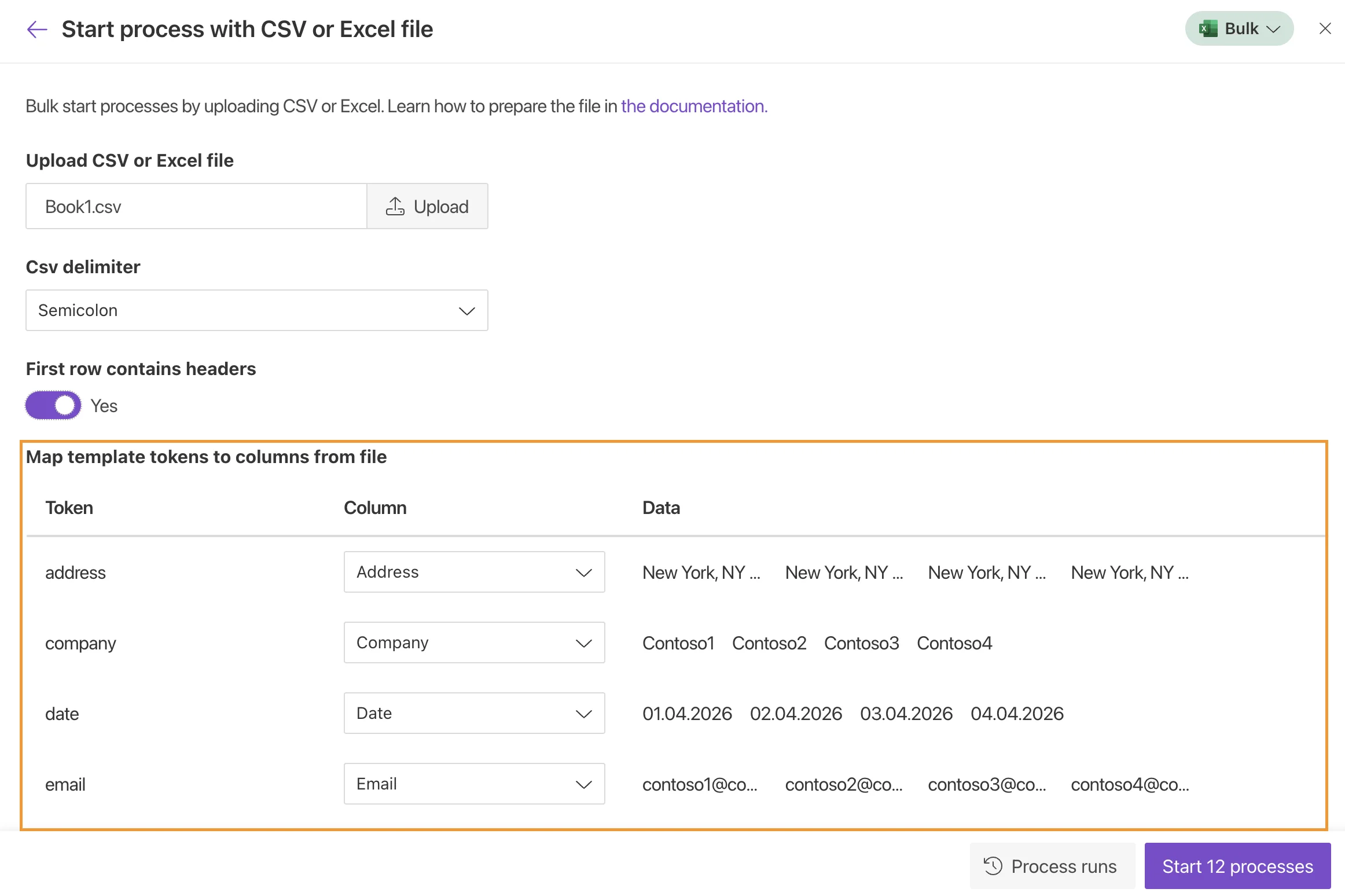
Map template tokens to columns from file
The Mappings table contains the following columns:
Token.
Displays tokens with simple types, such as strings and numbers, from the template. It also shows nested tokens, for example, an object inside another object that contains a string value. However, it ignores collections.
Column.
Column names extracted from the CSV or Excel file. If First row contains headers is enabled, it shows values from the first row. If not, it displays letters A, B, C, etc., to reference the columns.
Data.
Displays data from the uploaded CSV/Excel file. It shows the first five values from the first five rows, allowing you to validate the data before starting the processes.
Start process: test and production modes
After uploading the file and completing the mapping, start the process.
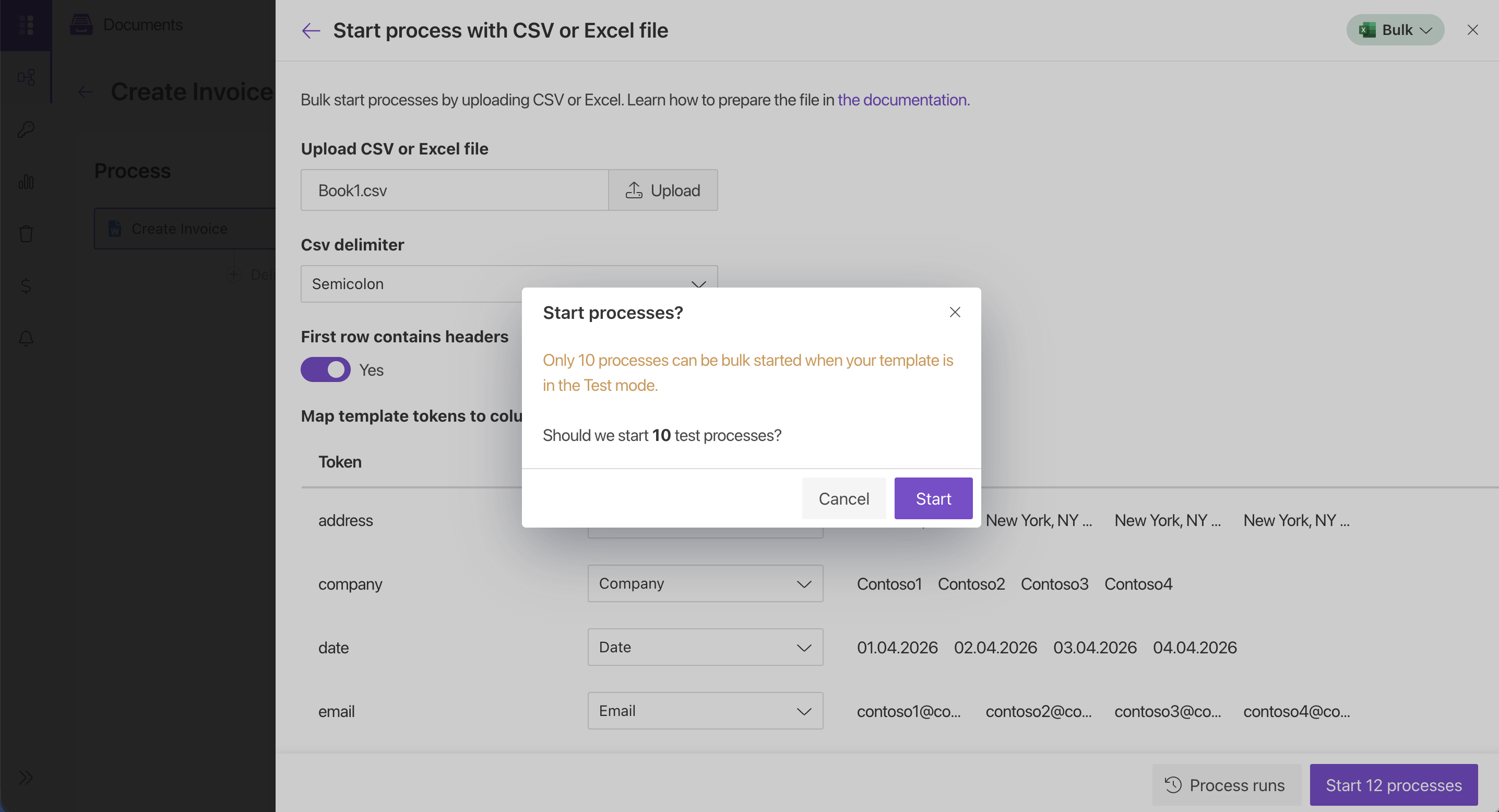
If you start a process that is in the Test mode
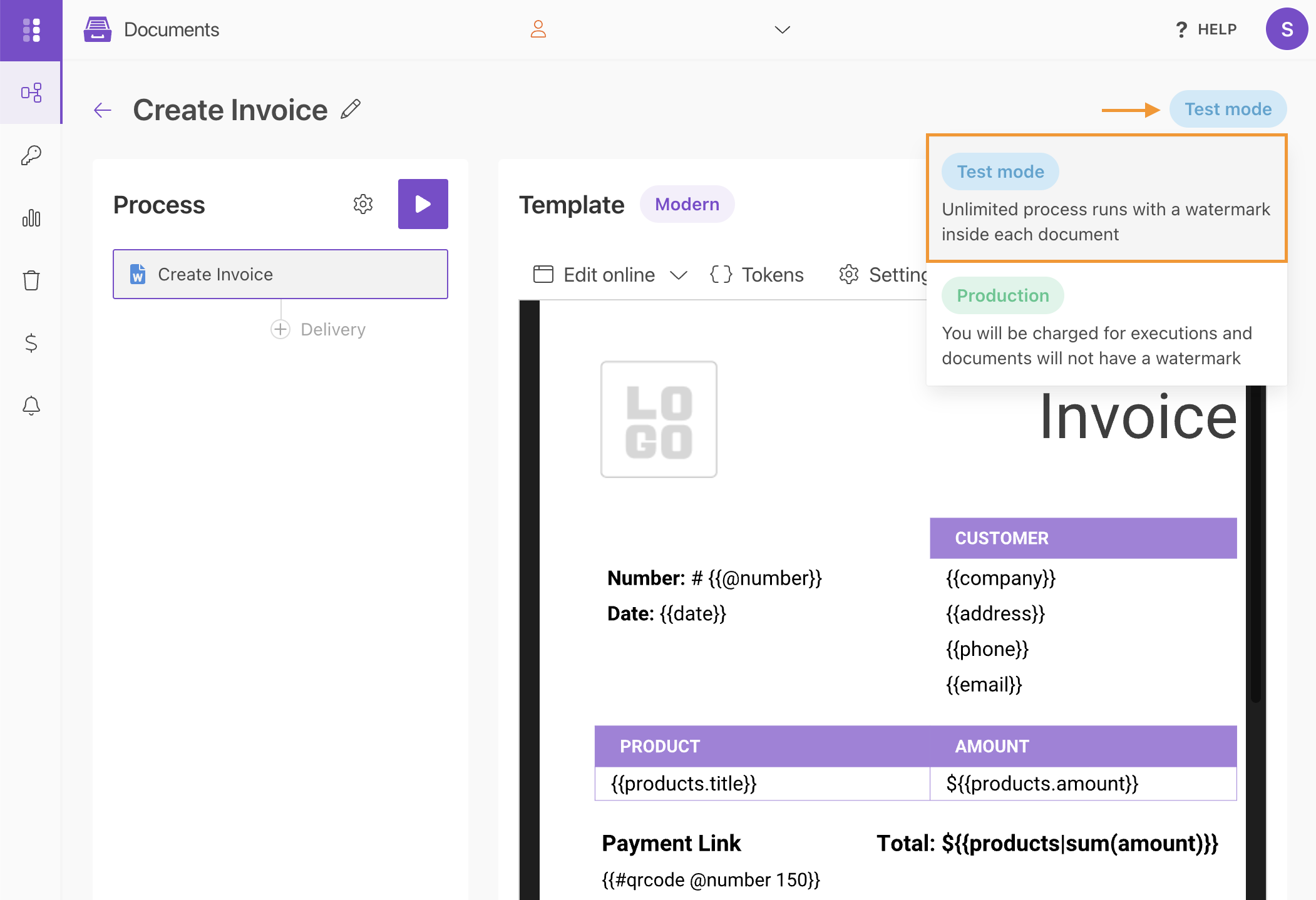
then it’s possible to start only 10 processes.
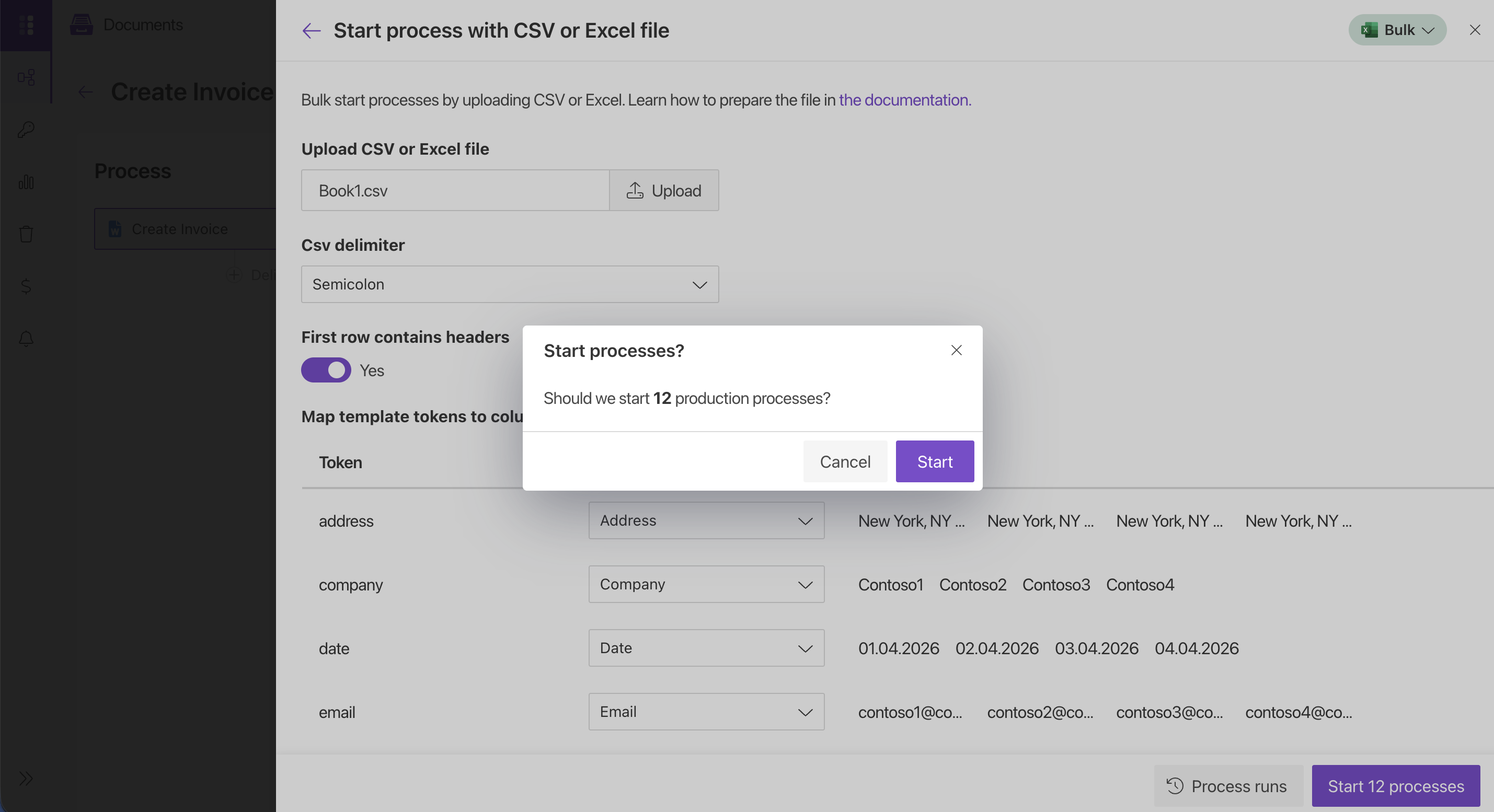
If this is a Production mode
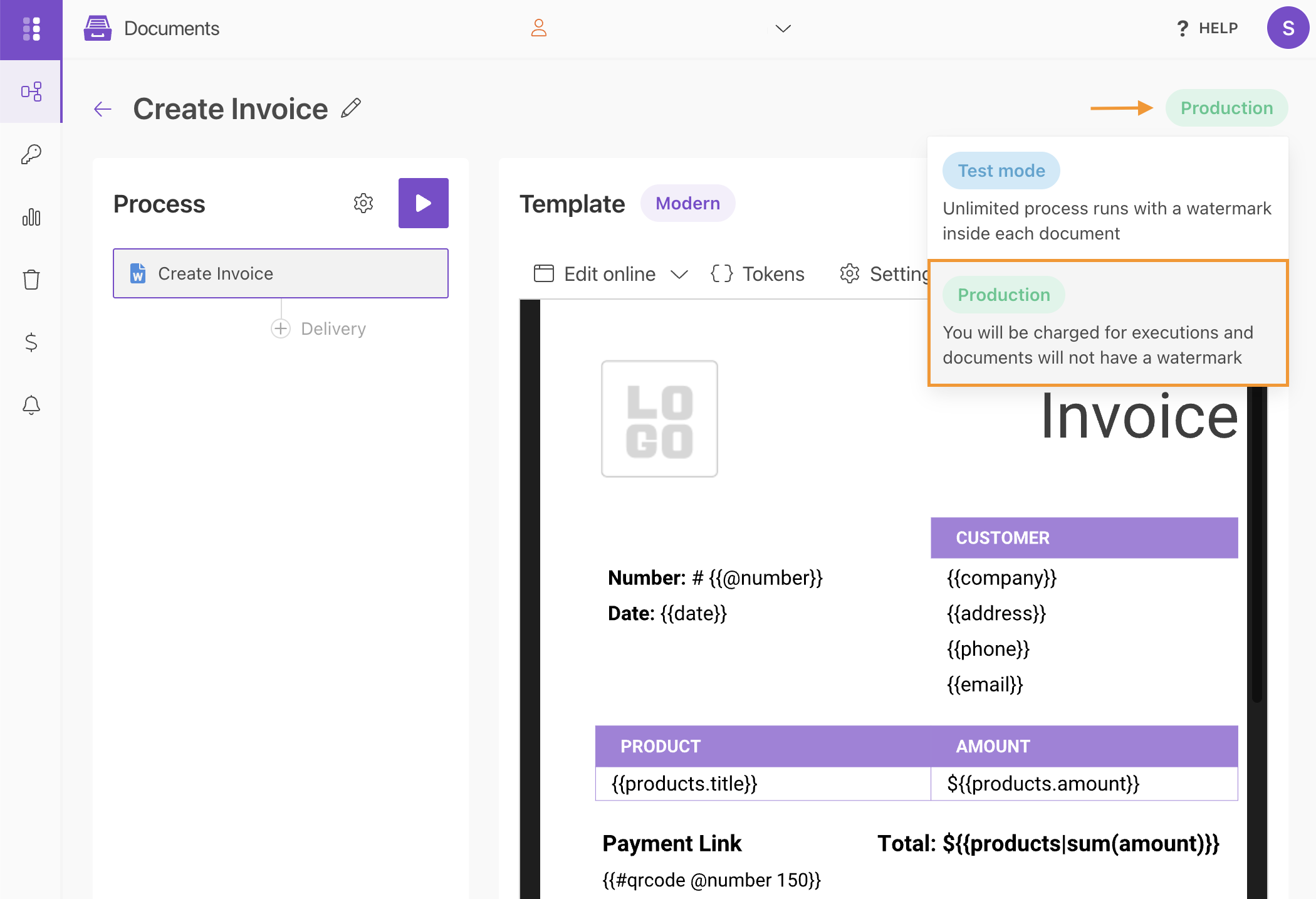
It allows starting the same number of processes as the number of rows from the CSV/Excel file.
After starting the processes, track progress in the runs history.