Amazon SES delivery
The Amazon SES delivery sends documents generated by your process as email attachments using Amazon Simple Email Service (SES). Before configuring the delivery, connect your Amazon SES account.
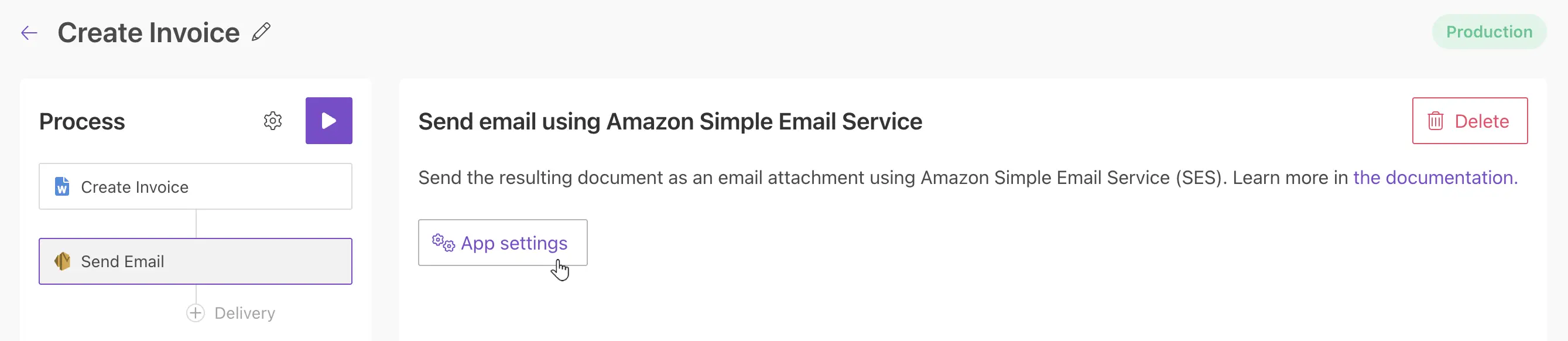
Connect Amazon account
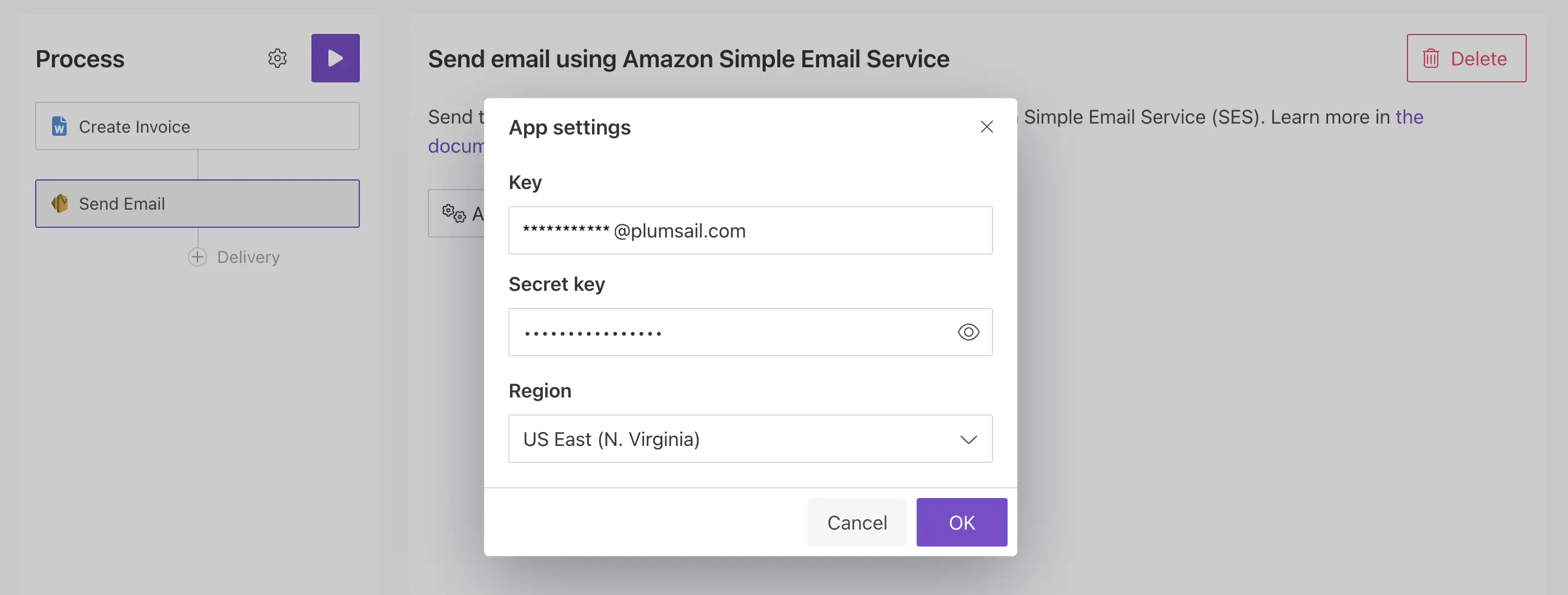
Create and copy the Access key and Secret access key using Amazon instructions.
Click the App Settings button in your process.
Paste the Amazon Access key and Secret access key. Then select the Region.
Main settings
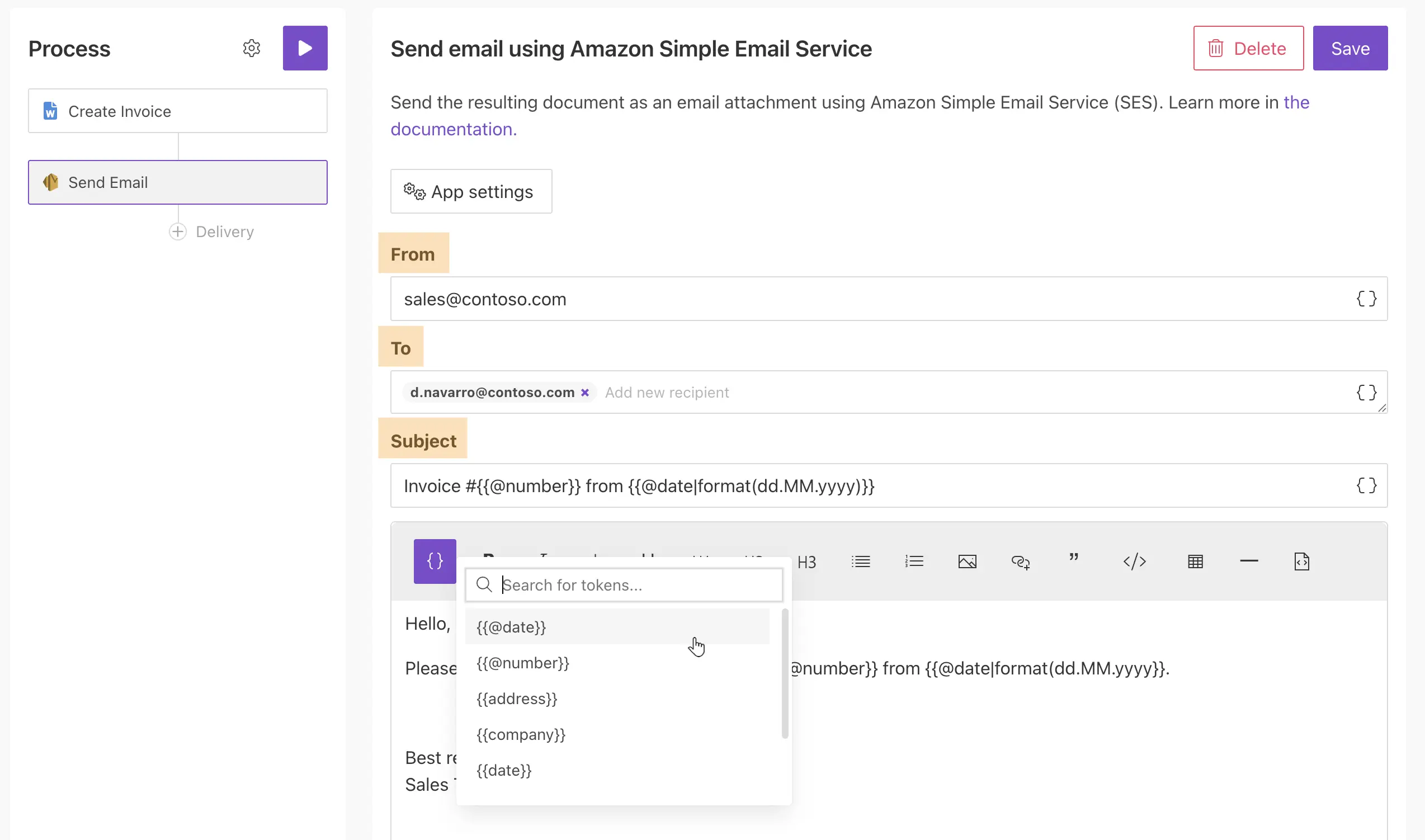
Once connected, configure the Amazon SES delivery settings.
Fill the From field and add recipients to the To field. See how to specify recipients dynamically based on your data.
Specify the Subject and Body. See how to use tokens in these fields.
Note
Make sure the From and To email addresses are added to Verified Identities in Amazon SES. See these Amazon instructions for details.
Advanced settings
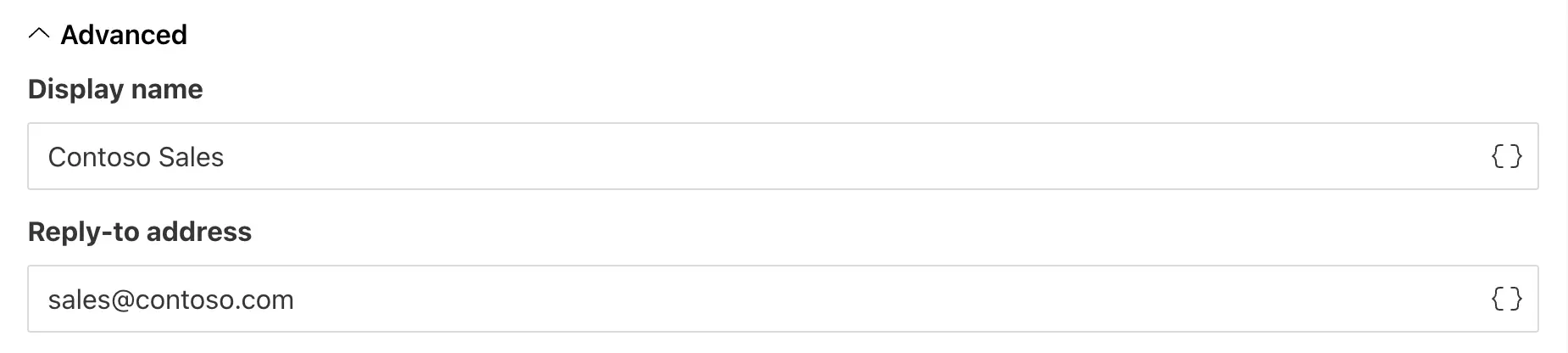
Expand Advanced to set:
Display name. The name displayed to recipients. By default, it matches your Plumsail account name. If necessary, you can change it.
Reply-to. The default is the email associated with the currently connected Plumsail account. You can also replace it with another email address.
Use tokens to specify recipients
- nosearch:
You can specify recipient email addresses manually or use tokens. The data passed to the process determines who receives the document.

The email token can contain a single address or a list of addresses separated by commas:
{
  "email": "john.smith@contoso.com, adam.allman@contoso.com"
}
Use tokens in email subject and body
You can insert values from your data using tokens.
Click { } to open the list of available tokens.
For example, if your data contains a property called address, insert it using the token {{address}}.
Tokens work the same way as in document templates and also support value functions.
You can also use predefined tokens:
{{@date}}- the current date and time{{@number}}- the current document number.
- nosearch:
Use rich text in email body (Modern engine)
If you use the Modern engine in your template, you can create more advanced email content using tokens.
For example, you can build tables or lists in the email body using data from tokens to create more personalized messages. This allows you to iterate over collections and display data in a structured way.
See the Build dynamic email content article for details and examples.
Note